‘AI needs guardrails’: Charlie Blakemore
Intercity's CEO talks AI adoption, security investment and the technology trends shaping the MSP’s next phase
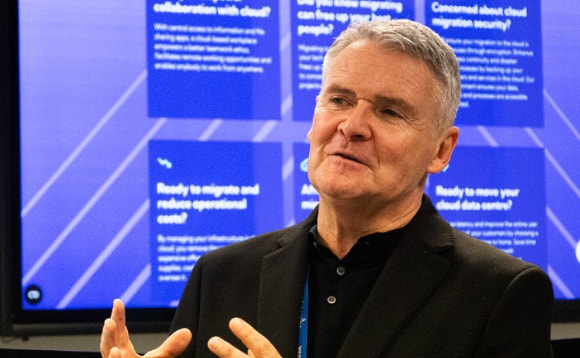
Security and AI will be two of the biggest drivers of customer demand for Intercity over the coming years, with CEO Charlie Blakemore telling CRN that the technologies are becoming increasingly intertwined.
The MSP has been investing in both areas as it expands beyond its traditional telecoms roots, with new technical hires, internal AI deployments and deeper Microsoft capabilities forming part of its strategy.
For Blakemore, security currently represents the most immediate opportunity.
“The big demand right now is in security,” he says.
“Security is going to be an evolving picture because as the threat landscape broadens and gets more sophisticated, then so do have to the defences.”
But the exec believes the rapid adoption of AI is increasingly changing that conversation.
“AI needs guardrails,” he says.
“Making sure there’s a good framework in place to develop that capability is really important from a security standpoint.”
AI and cyber
Rather than viewing AI and cybersecurity as separate opportunities, Blakemore expects the two areas to become increasingly connected.
Customers need to ensure their adoption of AI is secure, he argues, while the technology itself can also be deployed to strengthen their cyber defences.
“It’s AI, and it’s everything AI,” he says.
“It’s across all areas of the business and making sure that customers are pushing boundaries with their utilisation in a very secure manner."
Intercity has been experimenting with the technology extensively within its own operations.
The CEO says the organisation has around 95 to 100 AI agents operating across the business, with employees increasingly using AI as part of their everyday work.
“We’ve got colleagues who are working day in day out with AI as a true business assistant now,” he says.
“It’s been fantastic to see, and what’s great now is we’re taking our customers on that journey as well.”
Intercity is bringing in new expertise
The technology push is also influencing Intercity’s recruitment and leadership strategy.
The company recently appointed James Pearse as CTO, with Blakemore highlighting his previous experience at Microsoft.
At the time of the interview, Intercity was also preparing to appoint a Microsoft partner director who had previously worked for the vendor.
Blakemore describes the CTO appointment as “a statement of intent that we want to go again.
“I always believe that your strategy and your operating model and your structure is continually evolving to meet the opportunities in front of you.
“The next phase of growth, you do need to spend time getting stronger foundations in place, ready for scaling again.”
Intercity is also looking beyond conventional recruitment as it builds its AI expertise.
The company currently has two PhD students working within the business as part of Aston University’s AI PhD programme.
“We’re investing heavily in cyber, or have done, investing heavily in AI as well,” Blakemore says.
“Bringing research fellows in is superb because, again, that’s bringing some leading-edge thinking into our operations and our offerings.”
Microsoft first, but not only
Microsoft sits at the centre of much of Intercity’s technology strategy but Blakemore stresses that the MSP’s technology ecosystem stretches considerably further.
Across telecoms, Intercity works with Vodafone, EE, O2, VMO2 and Gamma, while its managed IT relationships include Fortinet, Aruba, Juniper and Cisco.
Those partnerships allow Intercity to add services around its Microsoft proposition rather than relying exclusively on the vendor.
The company also works with distributors including Arrow and Westcoast.
Sovereignty enters the conversation
Alongside AI and cyber, Blakemore expects technology sovereignty to become increasingly important to customers.
While the CEO sees benefits to customers maintaining a global technology strategy, he believes sovereignty is becoming particularly relevant where security and regulation are concerned.
That is particularly apparent in heavily regulated sectors and the public sector, according to Blakemore.
Intercity itself is going through the process of obtaining additional security clearances, with around 40 employees already security cleared.
But despite the attention surrounding AI, cyber and sovereignty, Blakemore says Intercity’s more established technology areas will continue to play a significant role.
“You’ve also got connectivity and telecoms, [which are] still an important part of our growth strategy,” he says.
“Our portfolio is really nicely poised now to continue to grow.”