‘The goal is to become a leader in AI’: SCC CEO on Project Sirius and £100m investment
Robert Vassoyan talks AI priorities, recruiting new talent and transforming the company from within
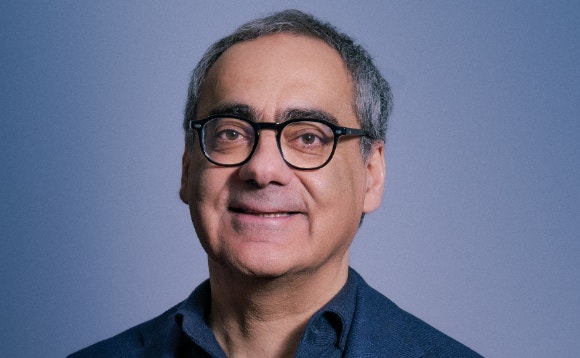
Project Sirius, named after the brightest star in the night sky, will see SCC invest between £50m and £100m over the next five years to become an AI leader.
SCC CEO Robert Vassoyan tells CRN that the plan, unveiled during SCC Engage, is designed to build on SCC’s existing strengths rather than fundamentally change the business, with investment spanning technology, services and talent across the UK, France, Spain and the Middle East.
“We’re taking what has enabled SCC to perform for more than 50 years and asking how AI can reinforce those foundations,” says Vassoyan.
“The goal is to become a leader in AI.”
The strategy comes after another strong financial period for the family-owned organisation, with the CEO revealing SCC delivered double-digit top line and bottom line momentum during Q1 after reporting strong financial results last year.
Project Sirius will initially involve between £10m and £20m of investment during its first phase before scaling according to customer demand and the evolution of AI.
Vassoyan says the final figure remains deliberately flexible.
“We’ll see how the business develops and whether demand evolves linearly or more incrementally.
“We estimate that over five years the investment will be somewhere between £50m and £100m.”
How SCC will support its customers’ AI ambitions
A key part of the project centres on helping organisations build the infrastructure needed to support AI workloads.
Vassoyan says customers are increasingly looking beyond public AI services and exploring dedicated private or hybrid environments tailored to their own requirements.
“We’re going to see hundreds of thousands of organisations investing in this type of infrastructure,” he says.
Those deployments could range from environments containing just a handful of GPUs to much larger installations, depending on the client’s intended use cases.
According to Vassoyan, the challenge extends well beyond supplying hardware.
Instead, organisations are seeking guidance on how to design the right architecture, including compute, networking, interconnectivity and facilities management.
“They need the right vision, the right architecture and the right blueprint based on what they want to achieve with AI,” he says.
SCC is also investing in the expertise needed to help customers build AI solutions using commercial AI platforms and machine learning technologies.
The company also plans to bolster its cyber capabilities with AI management and security tools while expanding AI across its digital workplace portfolio through virtual agents, AI-assisted service desks and more personalised employee experiences.
SCC prioritises organic growth
While SCC continues to assess acquisition opportunities across the business, Vassoyan highlights that Project Sirius itself is built around organic investment.
The company remains interested in purchasing entrepreneurial, technology-focused businesses that complement its existing capabilities, but the AI programme will reportedly be delivered independently of any acquisition activity.
“We’re always looking at opportunities but we’re not looking for mega acquisitions.” he tells CRN.
“We’re looking for medium-sized companies that complement our activities, bring technological expertise and share SCC’s entrepreneurial culture.”
He points to SCC’s buyout of Omega in Spain last August as an example of the group’s preferred approach.
According to Vassoyan, the purchase has boosted SCC’s position in the country, expanded its footprint and created a larger platform onto which the company can now deploy the capabilities being developed through Project Sirius.
“The integration has gone extremely well,” he says.
“I’m very satisfied with what the Spanish team has achieved.”
Recruiting AI talent
SCC intends to recruit around 100 specialists across the UK, France, Spain and the Middle East.
Rather than hiring a single type of AI expert, Vassoyan tells CRN recruitment will span the different areas the company expects customers to invest in.
For its AI infrastructure practice, SCC is looking for architects and consultants capable of helping organisations design AI factories based on their specific use cases.
“They need to understand whether customers are training LLMs, using inference, using statistical AI or GenAI, whether they want private or hybrid infrastructure and what sort of scale they require.
“Those people need to be able to define the architecture, demonstrate proof of concepts and build the right solution.”
The AI solutions practice will recruit consultants and field development engineers with expertise in machine learning, data and AI platforms to help customers deploy AI applications.
Within digital workplace, SCC is seeking specialists capable of deploying virtual agents, AI-assisted service desks and personalised workplace experiences.
Vassoyan says partnerships will also play an important role as the company scales its capabilities.
“We’ll complement our own skills with those of our partners and, in some cases, bring people from partners into SCC while we build our own capabilities,” explains the CEO.
Changing from within
While Project Sirius is designed to help customers accelerate AI adoption, SCC has chosen to apply the technology to its own business first.
Rather than focusing solely on productivity tools such as Microsoft Copilot, the company has selected one of its most complex operational processes - its cash and supply chain operations - as its first large-scale AI transformation project.
Vassoyan says the function spans hundreds of employees, dozens of business applications and almost every stage of the order-to-cash process.
“If we want to be serious, we also have to consume AI ourselves,” he says.
“We all use GenAI and Copilot like everybody else, but we wanted to take a real business process and completely rethink it.”
The programme will use AI to optimise quotations, improve order matching, reconcile invoicing with customer orders, reduce disputes, improve cash collection and increase employee productivity.
For Vassoyan, the internal transformation serves another purpose beyond operational efficiency.
“The people who deploy these solutions for our customers will also deploy them inside SCC,” he says.
“Everything becomes virtuous because we learn ourselves before helping customers do exactly the same thing.”