‘We’re using AI to deliver human outcomes’: SCC UK CEO
CRN sat down with Russell Brown during SCC Engage to discuss the VAR’s latest announcements, tech strategy and internal changes
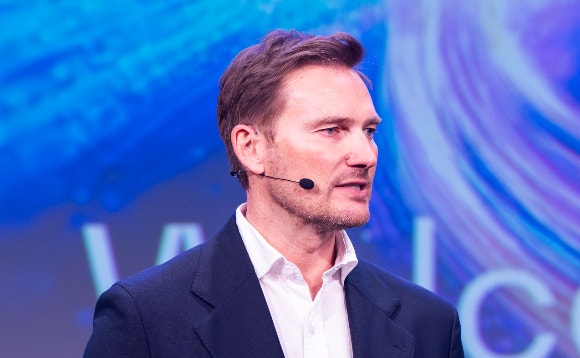
SCC Engage, the VAR’s recent event at Silverstone, Northamptonshire, was filled with major announcements, from the firm’s £50m AI strategy to its expansion into the Middle East.
Panels hosted by top executives gave attendees insight not only into the organisation’s future, but also into the wider evolution of the channel.
Following the sessions, CRN spoke with SCC UK CEO Russell Brown to discuss the announcements made during the day and their impact on the reseller’s strategy and partner relationships moving forward.
During your panel, you mentioned SCC’s involvement in the Olympics and Paralympics. Is the events sector becoming a major focus?
“It’s not a huge part of what we do. There was a conscious decision to partner with the Olympics, but it’s not historically been a major area of focus for SCC.
“We’re much more present on the high street, in healthcare and in the public sector than we are specifically in events.
“But what it teaches you is how to set up, perform and operate environments in a very high-intensity, high-visibility setting. It really tests capability and pushes you.
“Actually, it was because of our need to support the Olympics that we built out further cyber capability, because the last thing you can have is taking down the Games. It really forced us to develop future capability.”
How important is healthcare for SCC?
“It’s definitely a big sector that we’re engaged in.
“What I was trying to do by bringing the conversation to healthcare was take it away from technology and focus more on the human aspect of what we deliver.
“There’s no greater industry than healthcare to make that real. The technology is really just a by-product.
“We’re trying deliver a better human experience, hopefully saving lives, and ultimately doing that by giving time back to clinicians or people working in the industry.
“It was important to show how we’re using AI and other technologies to deliver real human outcomes.”
You also added that SCC’s role is to source, implement and manage technology. How important is each part within your revenue?
“If you look at revenue today, more comes from sourcing technology. But increasingly, the conversations we’re having are about outcomes and transforming customers’ environments, which is much more services-led.
“That said, delivering those solutions still involves hardware and software, so being a VAR and sourcing technology for customers remains incredibly important.
“It actually becomes even more important when we’re delivering services because it’s a fundamental part of delivering the outcome.”
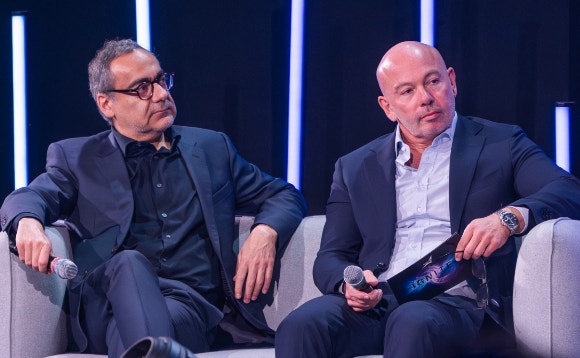
James Rigby and Robert Vassoyan discussed major investments in hybrid cloud, cyber and AI. Can you expand on that?
“We have our own cloud environment where we host customer applications, so as technology evolves we’ve made a major investment in upgrading that infrastructure.
“We’ve also invested heavily in our National Distribution Centre (NDC) and our integration environment where we bring technology in, build it and configure it.
“We also talked about the Sirius programme, which is around a £50m investment over the next few years. That’s fundamentally about improving our cyber capability, particularly active cyber defence.
“That includes using AI proactively to protect and prepare both our own environments and our customers’.
“There’s also huge investment in AI more broadly, building internal capability that we can then extend to customers.
“That’s about providing the infrastructure needed to deliver AI solutions and making things like the healthcare use cases we discussed more repeatable and scalable.
“We’re also looking at AI internally across core business processes. The first area we’re targeting is quote-to-cash, which runs right through the organisation.
“We genuinely believe we have to adopt these technologies ourselves to be credible when speaking to customers.”
You also spoke about active cyber defence and the new SOC in Birmingham. What does that involve?
“That’s part of what we call active cyber defence. It’s a capability we built because we recognised a gap.
“Traditionally, SOCs are very reactive. They monitor threats and respond once something happens.
“What we’re doing is using insight and tools like AI to proactively identify potential issues before incidents occur, assess the threat level and act earlier.
“That’s a new tier-one capability for us, and to support it we’ve invested significantly in upgrading the core engine in Birmingham.”
Following Steve Ruby’s appointment as chief services officer in March, you recently named Alexandra Wilkisnon head of public sector. What do these leadership changes represent?
“When I first came into SCC, like many large organisations, we’d developed a lot of complexity.
“Part of what I wanted to do was bring delivery under one leader to ensure consistency in how we operate, manage customers and deliver projects.
“[Ruby] now leads all UK delivery, including NDCs, project management, service management, engineering and the SOC, which gives us much more control, governance and innovation.
“[Wilkinson] is hugely connected, very well networked and genuinely passionate about improving outcomes for citizens.
“We’ve also brought in Adrian Criddle, formerly Lenovo UKI GM. He’s now driving strategy execution as we build out our three-to-five-year plan.”
Last time we spoke, you mentioned simplifying SCC internally. What progress has been made?
“We’ve made significant progress.
“Delivery now sits under one leader. Strategy is driven centrally, and we’ve reduced sales leadership from six roles to three.
“We’ve also reduced business units and shifted away from siloed technology conversations.
“Our pre-sales architects and CTOs now engage directly with customers and pull together the full SCC capability, so customers don’t need to navigate silos.
“It’s about streamlining the process and making it easier to deliver outcomes.”
Finally, how much are cloud repatriation and sovereignty influencing customer strategy?
“It’s definitely a factor.
“Every customer we work with has some form of hybrid environment, whether that’s on-premise and cloud or co-location.
“Sovereignty has made organisations think much more carefully about where their critical data and IP sits, and how they would recover if something went wrong.
“Cost, supply-chain challenges and pricing pressures are also pushing customers to optimise existing environments and, in some cases, bring workloads back on-premise.
“Ultimately, hybrid environments are here to stay.”