Inside SCC Recyclea: The Birmingham refurbishment centre targeting one million devices a year
CRN was given a behind-the-scenes look at how SCC processes approximately 2,000 devices a day. The VAR says it intends to double this to meet climbing demand for refurbished hardware and secure IT asset disposal

SCC is targeting the processing of one million devices annually at its Recyclea facility in Birmingham, doubling its current throughput as the VAR expands its refurbishment and recycling operations.
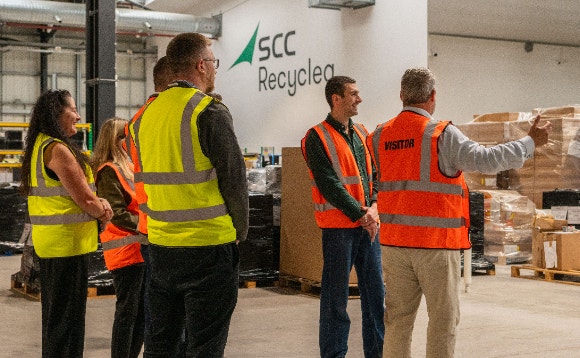
During a visit to the facility in Tyseley, Birmingham, CRN was given a behind-the-scenes look at how SCC processes approximately 2,000 devices a day, ranging from laptops and mobile phones to payment terminals and other electronic equipment.
Recyclea currently handles around 500,000 devices annually, with its workforce doubling from about 70 to 140 employees over the past two years.
The expansion comes as businesses and public sector organisations face increasing pressure to reduce IT expenditure, extend the lifespan of existing hardware and securely dispose of equipment containing sensitive data.
SCC moved its recycling operations into Oscar House in January 2024, having outgrown its previous premises.
The facility brings together device collection, data erasure, refurbishment, resale and recycling under one roof.
According to SCC, the business has invested millions of pounds in the site, which forms part of its wider strategy to develop circular IT services.
The company’s ambitions extend beyond recycling equipment.
Through partnerships with technology vendors, public sector organisations and charities, SCC is seeking to create a market for refurbished devices that can compete with new hardware on price, reliability and warranty coverage.
From discarded laptops to refurbished devices
The scale of Recyclea’s operations becomes apparent on the warehouse floor, where devices are received, tracked and directed through different processes depending on their condition and potential for reuse.
Led by Recyclea GM Adrian Saint, the tour demonstrated how equipment that might otherwise be written off can be restored to working condition and returned to the market.
Every item is tagged and tracked throughout the process, allowing SCC to monitor how long it has been at the facility and follow its progress through the different stages of treatment.
Devices suitable for refurbishment undergo data erasure, inspection, testing and cleaning before any necessary repairs or cosmetic restoration.
For laptops, the process can include restoring keyboards and applying specialist surface coverings to conceal signs of wear, giving devices a near-new appearance.
The final stages require particular care to prevent dust and other particles from becoming trapped during cosmetic restoration.
Equipment that cannot be economically refurbished is directed towards recycling, where components and materials are separated for recovery.
During the visit, CRN also saw the industrial shredding equipment used to break down discarded hardware before materials are processed for recycling.
Precious metals, including gold recovered from electronic components, are sent to specialist facilities for further extraction.
Recyclea currently processes roughly 500 tonnes of waste electrical and electronic equipment (WEEE) annually.
The facility operates across two shifts, from 6am to 2pm and 2pm to 10pm, enabling SCC to handle substantial volumes of incoming equipment.
Its workforce expansion reflects the increased operational demands associated with processing, testing and restoring devices rather than simply disposing of them.
Refurbishment offers a cheaper alternative to replacement
Beyond its environmental implications, SCC is positioning refurbishment as a way for organisations to reduce their IT spending.
According to figures provided by the company following the visit, refurbishing an organisation’s existing devices can cost less than 25 per cent of purchasing replacements, while buying refurbished equipment can cost approximately 50 per cent less than buying new.
These savings are particularly relevant to public sector organisations facing pressure on budgets, including local authorities, healthcare providers and government departments.
SCC works with the NHS and other public sector customers, where extending hardware lifecycles can free up spending for other projects.
The company also refurbishes devices on behalf of technology manufacturers, meaning customers may purchase equipment through a vendor without necessarily knowing that the refurbishment was carried out by SCC.
One of its most significant relationships is with HP.
SCC is the first UK refurbisher certified by HP, allowing it to restore devices to standards established by the manufacturer.
The company is also preparing to introduce two- to three-year warranties on refurbished HP devices, extending beyond its existing one-year guarantee.
SCC confirmed that the expanded warranty offering is forthcoming, although it did not provide a firm launch date.
The move could help address one of the main barriers to refurbished hardware adoption: concerns about reliability and the level of support available compared with new equipment.
Longer warranty periods may also make refurbished devices more attractive to organisations that traditionally favour new hardware for large-scale deployments.
SCC recommends returning devices for refurbishment while they remain functional, rather than waiting until they are damaged or no longer suitable for reuse.
Equipment returned after approximately three years, for example, may still have significant value in the secondary market, particularly when its components remain in good condition.
Data security becomes a central part of circular IT
For organisations handling sensitive information, the decision to reuse or recycle equipment depends heavily on whether the data stored on it can be securely erased.
This is particularly important for SCC’s customers in government, healthcare and policing.
Recyclea provides certified data-erasure services designed to remove information from devices before they are refurbished, resold or recycled.
The company uses security-cleared engineers and maintains audit trails linked to individual devices, providing customers with evidence that data has been removed.
SCC confirmed that it has engineers with Non-Police Personnel Vetting Level 3 (NPPV3) clearance who can carry out data erasure directly at secure customer sites, including police facilities.
This allows sensitive equipment to be sanitised without necessarily being transported to the Birmingham warehouse.
The capability is significant for organisations where moving devices containing confidential information creates additional security and compliance concerns.
SCC has also held certification under the National Cyber Security Centre’s Commodity Information Assurance Services - Sanitisation scheme, covering secure data sanitisation services.
The company intends to make device collection more accessible through another initiative: secure collection boxes that can be installed in public sector locations such as libraries.
The boxes, which are currently in a pilot phase, are designed to allow people to deposit unwanted laptops, tablets and mobile phones for collection and processing.
Each has a maximum weight capacity of 25kg, reflecting the requirements of the DPD collection service used for the initiative.
If expanded, the scheme could provide SCC with another source of devices suitable for refurbishment while offering organisations a more convenient way to dispose of unwanted technology.
An opportunity for the UK channel
Recyclea’s expansion reflects a broader shift in how IT providers approach hardware lifecycle management.
Rather than treating device disposal as the final stage of a transaction, SCC is developing services around collecting, securing, restoring and redeploying equipment.
For resellers and MSPs, the commercial opportunity extends beyond selling refurbished laptops.
It includes asset recovery, secure data erasure, logistics, warranty-backed hardware supply and ongoing lifecycle management.
SCC’s model also allows manufacturers to participate in the refurbished hardware market without necessarily developing their own large-scale refurbishment infrastructure.
The company says its recycling and refurbishment operations have a zero-landfill commitment, with equipment directed towards reuse or material recovery where possible.
However, increasing the volume of devices processed does not automatically mean every device can be refurbished. Equipment that is unsuitable for reuse still needs to be recycled, making material recovery an important part of the operation.
The challenge for SCC will be increasing throughput towards one million devices while maintaining the security, testing and quality standards required by enterprise and public sector customers.
SCC’s Birmingham investment beyond the warehouse
SCC’s investment in Birmingham is also tied to the Rigby family’s wider ambitions for the West Midlands.
The company employs more than 500 people in Birmingham and approximately 1,700 across the UK, according to figures confirmed following CRN’s visit.
Its headquarters at James House is located in an area of Birmingham facing significant economic and social challenges.
Through the Rigby Foundation and the Sir Peter Rigby Charitable Trust, the family is supporting initiatives aimed at improving educational opportunities and employment prospects for young people across the region.
Since 2023, the two charitable organisations have committed more than £19m to evidence-based charities supporting communities in need.
One of their principal initiatives is Inspiring Futures, a £3m programme running over three years, with £1m committed annually.
The programme works with schools, colleges and charities to support young people from disadvantaged backgrounds through academic assistance, employability training, essential skills development and mental health support.
According to SCC, Inspiring Futures has engaged more than 1,600 students through approximately 2,500 activities.
The programme has surpassed its original ambition of supporting at least 1,000 students annually.
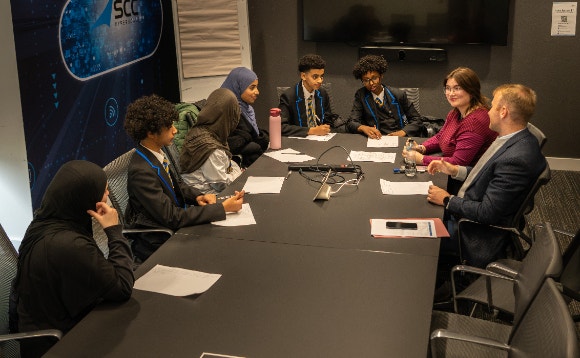
During the visit, CRN attended an employability workshop at SCC’s headquarters involving students from Ark St Albans Academy, a Birmingham school with one of the highest pupil premium rates in England.
The workshop was led by Rigby Foundation partnerships lead Jemima Waltho, with SCC employees, including members of its Young Professionals Group, supporting student activities.
The sessions focused on developing practical employability skills and giving students opportunities to engage with professionals working in the technology sector.
SCC also supports Generation UK, a separate three-year initiative receiving £600k in funding, or £200k annually.
The initiatives form part of the Rigby family’s efforts to support regional development and create opportunities for young people who may otherwise face barriers to entering employment.
Refurbished devices support digital inclusion
The connection between SCC’s recycling operations and its social mobility initiatives was further illustrated during a visit to City Academy in Birmingham.
The final stop of CRN’s visit focused on the donation of refurbished laptops to City Academy, a local secondary school, demonstrating how devices processed through Recyclea can be used to support digital access.
The initiative forms part of SCC’s wider work with schools, charities and community organisations to address digital exclusion.
The company has previously donated refurbished laptops to charities and educational organisations, including through its relationship with HP.
In December, SCC announced the donation of seven HP Renew devices to STAR Small Heath Leadership Academy, another Birmingham school participating in the Inspiring Futures programme.
SCC has also worked with the West Midlands Combined Authority on initiatives to collect unwanted technology, refurbish usable equipment and redistribute it through digital inclusion programmes.
These activities provide a practical connection between the company’s commercial refurbishment operations and the charitable work supported by the Rigby family.
For SCC, the ambition is to expand the scale of its circular IT business while demonstrating that equipment no longer required by one organisation can still provide value elsewhere.
With Recyclea processing around half a million devices annually and targeting one million, the Birmingham facility is becoming an increasingly important part of that strategy.