XChange MSP 2026: AI is fundamentally transforming the role of MSPs
As AI continues to restructure the industry, speakers and attendees discussed how the industry is adapting, and what the future holds for MSPs
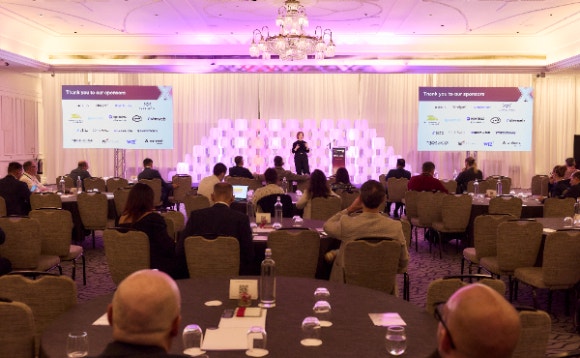
XChange MSP 2026 proved to be a successful day of networking, knowledge sharing and networking.
As AI continues to dominate industry conversations, one thing was clear; the technology isn’t going anywhere, so MSPs need to adapt and find real value for themselves and their customers.
If you happened to miss the event yesterday, we wanted to give you a taste of what was on offer at the London conference this time around.
CRN research: technology complexity is making the role of MSPs more relevant
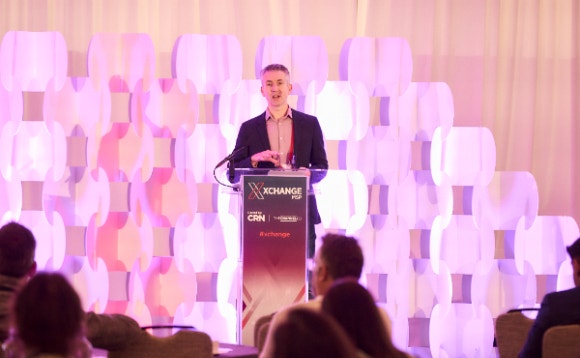
The event opened with The Channel Company’s chief content officer, Stuart Sumner, presenting UK-focused research conducted by The Channel Company’s IPED consulting arm.
“For most of the last decade, we've talked about the channel and IT itself as being in transition.
“But today, I think that word transition is less accurate than it has been because that implies gradual change.
“What we're experiencing right now is very much structural change.”
The managed services market is undergoing a transformation as the impact of AI, cybersecurity, cloud complexity, regulation and changing customer expectations are restructuring the industry.
“The market is restructuring in favour of MSPs that can deliver repeatable, scalable, and increasingly AI-enabled services,” explained Sumner.
According to the research, nearly 90 per cent of partners said their customers' biggest challenge is having enough skills and expertise to manage technology effectively.
This has transformed the role of an MSP from being a technology implementer, to “becoming true transformation partners” that can create real business outcomes.
According to the research, the best avenues for growth lie within existing customer bases.
77 per cent of partner revenue is generated through existing customers, while 23 per cent comes from new business.
“Growth is less about finding entirely new opportunities, and more about expanding your relevance inside existing accounts,” Sumner highlighted.
While headlines suggest channel business models have already evolved, the research says otherwise.
Most MSPs are still in the middle of their transformation journeys, with the greatest investments focused on recurring revenue models, managed services expansion and professional services growth.
The market hasn’t yet settled on what an AI-enabled managed service will actually look like, but the research makes one thing clear, “The winners won't just use AI internally, they'll package that AI into repeatable customer outcomes.”
Attendees have their say
Following the research presentation, it was time for the room to share their views.
The first question asked attendees, “what is your biggest business priority over the next 12 months?”
The top priorities of the leaders in the room revealed that growing revenue, AI and automation and cybersecurity came top of the priorities list.
Speaking with delegates in attendance, what we were hearing was that growing revenue and AI and automation came hand-in-hand.
Investing in AI has become a priority in order to grow revenue and achieve operational efficiencies, and the usage of AI within MSPs is also highly linked with the potential growth opportunities they can provide their partners.
“Every conversation we have with a customer, one way or the other, leads to AI.
“Therefore, we need to invest in AI internally to show confidence to the customer that they’re talking to the right partner,” an attendee explained to CRN reporters on the ground.
When it comes to investment, AI services came out on top, followed by security.
Another delegate told reporters, “It’s by default that security is never going to be our second priority.
“We can’t implement AI without it.”
While AI remains the biggest talking point and biggest investment of the industry, it’s clear that priorities and investments are shifting in order for organisations to remain secure and trustworthy in the AI-enabled era.
The landscape is shifting, and MSPs need to keep up

“The future of IT is no longer reactive; it's going to be autonomous,” declared Tashan Johnson-Daniel, sales manager at ConnectWise.
AI is redefining what customers expect from MSPs, and the industry’s competitive advantage will shift from resolving issues to preventing them altogether.
He argued that MSPs will need to move away from reacting to tickets and incidents, and towards systems that increasingly manage themselves.
AI will move beyond automating workflows, and will eventually identify and fix issues before customers even notice, shifting expectations from automation to prediction.
The role of the MSP itself is also changing.
Eric Torres, VP channel and community engagement, Pax8, stated, “we see the managed service provider transitioning to a managed intelligence provider.”
During his session, panellists discussed how they are monetising AI consulting, workflow automation and custom agents.
This new evolution will see MSPs becoming the architects of intelligence infrastructure and orchestraters of business outcomes for AI-native businesses.
“The engineer is dead,” said a panellist, highlighting that customers are increasingly looking for guidance, automation and intelligence, rather than traditional ticket-fixing.
As MSPs look to commercialise AI services, leaders need to position AI conversations around operational bottlenecks and the value the technology provides, rather than the technology itself, the panellists agreed.
What are UK SMBs actually buying in 2027?
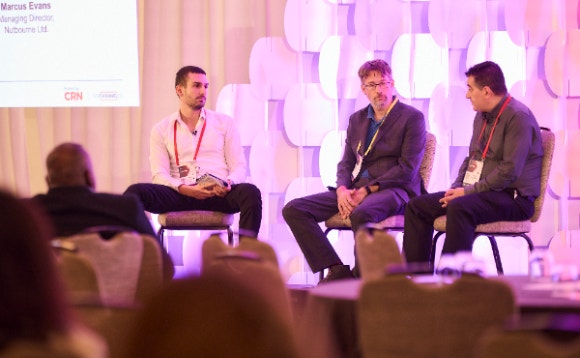
The day concluded with a look into the future, with a panel chaired by CRN’s Paul Ferretti, joined by Nick Ioannou, information security manager at EDMISTON, and Marcus Evans, MD of Nutbourne Ltd.
UK SMBs have more technology choice than ever before, but what are they actually spending their money on?
Evans explained, “They're still buying IT support as a service, although increasingly that's navigating away from reactive to proactive work.
“I'm seeing a lot more governance being bought at a higher level.”
Ioannou explained the drive for wanting technology that covers his business and extends beyond business hours, “We're only working eight hours a day, the business is 24 hours a day.
“So [we are looking for technology that] extends our own teams work.”
SMB customers are increasingly interested in AI, but adoption is uneven.
Evans explained that he is seeing very small teams building custom AI agents aggressively, but on the other hand, larger workforce SMBs are often delaying deployment due to concerns of the impact on the workforce, whether that is due to cutting workforce numbers or a lack of AI training.
A key takeaway from the panel was that vendors remain ahead of customer demand when it comes to AI.
“A lot of the time we try and sell what the vendors tell us we should be selling, and actually, there's a disconnect there between what the clients actually want and what we should be trying to do for an outcome,” Evans explained.
“It's now more about seeing where they are, working out what they want, and looking at business outcomes [technology can provide].”
Ioannou echoed this sentiment, discussing that his business is currently undergoing a data governance project, which he referred to as “the dull bit”.
“A good MSP understands your business, or more importantly, they'll help you to ask the right questions so you actually understand your own business.
“Because there's loads of times when someone sees and reads something and says, ‘Oh, we really need this’, and then it's just a case of trying to explain to them that we really don't need this, we need this instead.”
The panellists agreed that the role of the MSP for SMBs continues to be a trusted advisor role, as AI skills and knowledge is growing slower than mainstream adoption.