XChange UK Day 2: Why the channel’s biggest challenges are now human, not technical
From hybrid work, AI, and the human consequences of technology failure. Speakers delivered a clear message: the future of the channel will be shaped less by infrastructure and more by experience, leadership and accountability

Across panel discussions, fireside chats and a powerful keynote, this year’s CRN XChange UK 2026 made one thing clear: the biggest challenges facing the UK channel are no longer purely technical.
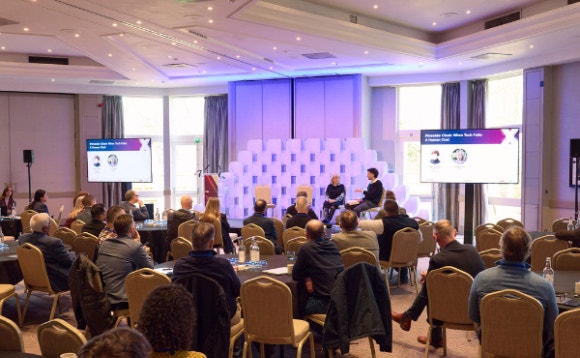
Leaders from across the industry gathered at The Belfry, Birmingham, to discuss how skills shortages, hybrid work and AI are reshaping workforce strategy, while Tim Russell of CDW argued that user experience has effectively become a new layer of infrastructure.
But the event’s most sobering lesson came from keynote speaker Jo Hamilton, whose story from the Post Office Horizon scandal served as a stark reminder of the human consequences when technology systems fail and institutions refuse to listen.
Here’s a recap of day two of the event.
Why experience has become critical infrastructure
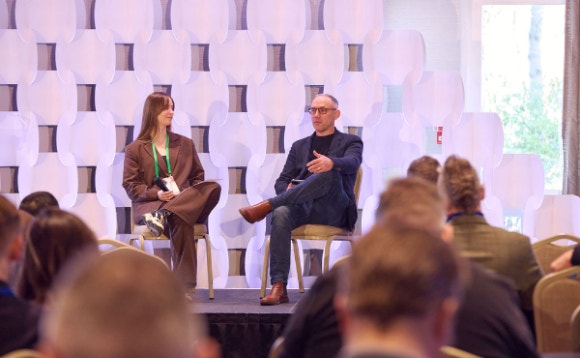
Tim Russell, chief technologist for modern workspace at CDW, delivered a clear message to channel leaders: in today’s digital workplace, user experience has effectively become a form of infrastructure.
For decades, IT teams have focused on keeping systems running—measuring uptime, network performance and security. But Russell argued that these traditional metrics no longer tell the full story.
“Systems can be up, but work can still be down,” he said. “And if work is down, productivity is down.”
In an environment defined by SaaS applications, hybrid working and increasingly complex technology stacks, organisations must start treating experience itself as a measurable and critical part of IT infrastructure.
Historically, IT success has been defined by system health.
Those metrics still matter, Russell noted, but they are no longer sufficient on their own.
Russell compared the situation to sitting in a perfectly functioning car that is stuck in traffic.
“Everything about the system might look good—the engine’s running, the temperature is right—but you’re going nowhere,” he explained. “That’s exactly what happens when we measure infrastructure without measuring experience.”
Instead of focusing purely on technical uptime, organisations need to understand how systems feel from the perspective of the end user.
The complexity of the modern workplace
One reason experience has become so critical is the way work itself has changed.
The shift to remote and hybrid working accelerated by the Covid-19 pandemic, has dramatically increased reliance on cloud-based software and digital workflows.
If those systems fail to integrate properly, the result is a poor user experience, even if every individual platform appears healthy.
“Each component might show as green on a monitoring dashboard,” Russell said. “But if they’re not working together, the end result is that the job can’t be done.”
This growing complexity means organisations must start monitoring technology from the user’s perspective, not just the infrastructure layer.
The real cost of poor experience
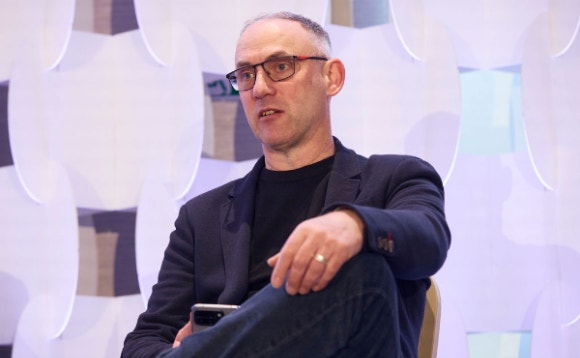
One of the most overlooked consequences of poor digital experience, Russell warned, is its financial impact.
He highlighted that even five seconds of lost time across a large workforce can translate into significant productivity losses.
But time is only part of the equation. The deeper cost is trust.
When employees repeatedly encounter unreliable systems, they begin to lose confidence in the tools provided by their organisation. Once that trust erodes, adoption becomes harder and employees may avoid using official systems altogether.
“Experience compounds like technical debt,” Russell said. “The worse the experience, the bigger the debt you build with your users.”
Measuring experience at the edge
To address these challenges, Russell believes organisations must rethink how they measure IT performance.
Traditional monitoring tools focus on infrastructure metrics such as server uptime, network latency or CPU utilisation. But these indicators do not necessarily reflect the user experience.
Instead, Russell highlighted the growing importance of endpoint-level monitoring, where organisations measure what users actually experience on their devices.
This might include analysing application response times, tracking user interactions or identifying patterns of frustration, such as repeated clicks or delays in workflows.
The shift reflects a broader trend: monitoring is moving away from the data centre and closer to the edge of the network, where employees actually interact with technology.
“It’s not enough to know a system is available,” Russell said. “We need to know whether it’s working for the people using it.”
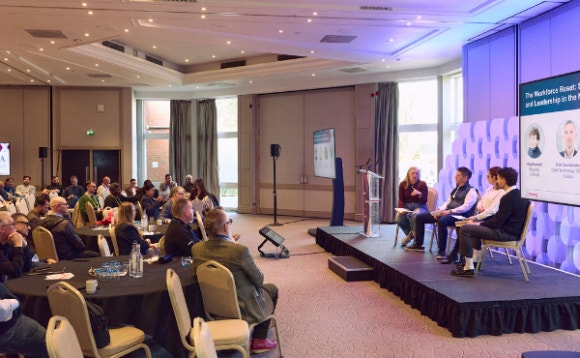
The workforce reset: Skills, culture, and leadership in the next channel era
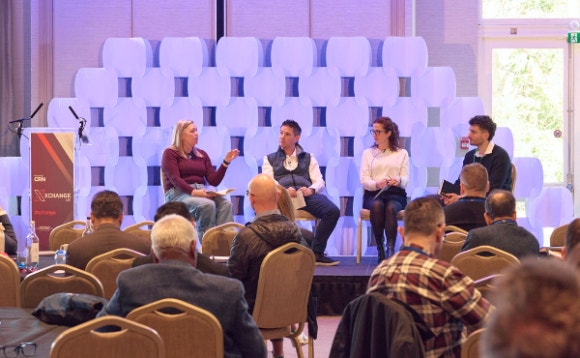
For many organisations, people, skills and leadership, not just tech, are now the biggest constraints to growth.
The first panel of the day explored how UK partners are responding to rapid shifts in technology, talent and working models.
The shift to remote and hybrid work accelerated by the aforementioned global pandemic, continues to reshape how channel organisations operate.
For some companies, remote work is already deeply embedded. Jenny Latimer, operations director at Highgate IT Solutions, explained that her organisation has operated with a fully remote workforce since 2010.
Her advice to the audience was to commit to a model and be consistent.
“Have a plan and stick with it,” she said. “If you want people to be remote, let them be remote. If you want hybrid, define what that means and make sure everyone follows it.”
Other organisations are taking a more flexible approach. Rob Quickenden, chief technology officer at Cisilion, described how his company moved from fully remote working during the pandemic to a looser hybrid model without strict mandates.
Panellists also noted that employee expectations have shifted permanently. In many roles, five days in the office is now unrealistic, particularly in the competitive market for technical talent.
Debra Cairns, MD at Net-Defence explained the firm is more mandated, asking for three days in the office.
However, she adds that it’s about the people, not the work.
“You can earn trust, but you have to grow a culture.
“There is now an expectation when you're bringing people into the business that they can be a minimum hybrid. I don't think you get a chance to say no five days in the office anymore. I think it's exceptionally rare now.”
Changing investment priorities in core skills
When it comes to recruitment, the panel agreed that technical skills alone are no longer enough.
Instead, organisations are increasingly prioritising cultural fit, adaptability and transferable skills.
For smaller businesses in particular, flexibility is critical. Employees often need to operate across multiple responsibilities rather than staying strictly within a defined role.
“Being an SME, I'm also looking for agility, and accepting that I’m bringing someone into a role, but I'm going to want them to be able to flex a little bit, not looking for somebody who is, ‘this is my job, and this is all I will do,’” said Cairns.
“We hired an IT engineer who had never done IT support. But his customer service from working in hospitality was great. So I thought, ‘if you can deal with a drunk person, you can absolutely deal with an annoyed IT customer’. So we took the risk with him, and it paid off dividends for us.”
As companies scale, hiring strategies also evolve. The panellists noted that rapidly changing technologies mean that specific skills can quickly become outdated.
The rise of generative AI is a good example. Just a few years ago, few professionals had experience with these tools; today, organisations are rapidly building internal expertise.
As a result, many leaders are focusing on hiring people who are curious, adaptable and eager to learn rather than those with narrowly defined technical skills.
AI adoption: productivity before transformation
The panel shared practical examples of how AI is already reshaping work inside channel organisations.
Rather than pursuing ambitious transformation projects immediately, many companies are starting with smaller productivity gains.
Beyond personal productivity, organisations are also exploring operational automation.
“The biggest transformational piece of work we've done so far is all our supply invoices are now automated,” Laitmer told the audience.
“Previously someone would manually process them. As we were getting bigger, we were getting more supplier invoices, which would take longer.
“So we built a tool that reads and processes PDFs into our CRM. The AI wraparound is, if there is something wrong, it will give you a percentage accuracy. It will tell you what is wrong, it will tell you what doesn't match, and then it will tell you how it thinks it should match.”
Other potential applications include analysing sentiment in service desk data, improving marketing processes and monitoring customer risk through external data signals.
However, panellists emphasised that human oversight remains essential.
“Remember you need to be the editor of what AI has given you,” said Cairns.
“We need to make sure we don't lose our human touch, which we're proud of as a business, that we try to put the human in tech.”
‘They cannot be allowed to get away with it’: Jo Hamilton on the fight for justice after the Post Office Horizon scandal
The keynote session took a powerful turn away from technology and toward its human consequences.
Jo Hamilton, one of the sub-postmasters wrongly convicted during the UK’s Post Office Horizon scandal, shared her story of how a faulty IT system destroyed livelihoods—and how a two-decade fight for justice reshaped public understanding of technology accountability.
Her message to the audience of IT and channel leaders was simple but stark: technology failures are never just technical problems—they affect real people.
Technology, accountability and lessons for the industry
Speaking to an audience of IT professionals, Hamilton emphasised that the Horizon case was not simply a legal scandal, but also a technology failure.
Lawyers, politicians and investigators struggled to understand the underlying systems, allowing flawed evidence to be treated as unquestionable.
“The legislation just hasn’t kept up with technology,” she said.
She warned that the rapid rise of technologies such as artificial intelligence could create similar risks if systems are trusted blindly without proper scrutiny.
Back when Horizon was introduced, Hamilton said she believed the system must be correct simply because it came from a trusted national institution.
“I believed everything they said,” she explained. “It was the Post Office.”
Recognition after a long battle
Hamilton was recently awarded an OBE for services to justice in recognition of her role in exposing the scandal.
But even that honour carries mixed emotions.
The same government that fought victims in court for years was now celebrating their campaign.
“I accepted it,” she said, “but the whole thing is a bit strange.”
A warning for the technology sector
For the technology leaders in the audience, Hamilton’s keynote served as a powerful reminder of the responsibility that comes with digital systems.
Technology increasingly shapes how organisations make decisions—from financial systems to automated processes and AI tools.
When those systems fail, the consequences can be profound.
The Horizon scandal demonstrates what can happen when institutions trust technology blindly and ignore the voices of the people using it.
“Listen to the people on the ground,” Hamilton told the audience.
Did you miss out on XChange UK? You can still register to attend XChange EMEA, taking place on 22-23 June in The Netherlands. Click here to visit the website and here to secure your free place.