Insight UK MD: ‘We’re seeing a huge increase in demand for AI, driven by the Middle East’
Darren Hedley tells CRN Insight’s focus is on AI, with investments in the Middle East driving growth
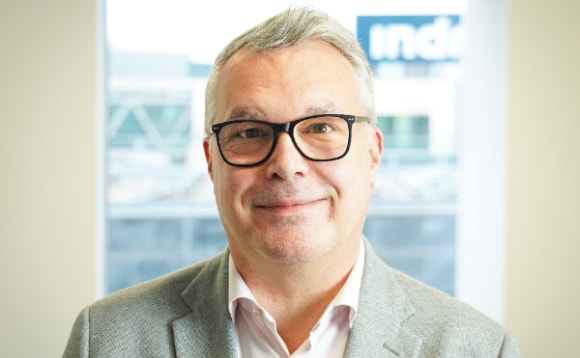
Insight UK is seeing a surge in demand for AI solutions, with much of the momentum coming from the Middle East, according to managing director Darren Hedley (pictured).
Currently, all ME business reports into the UK organisation, and Hedley says this part of the NASDAQ-listed outfit is proving pivotal as clients increasingly move from AI experiments to large-scale, ROI-driven deployments.
“We are seeing a huge increase in demand for AI, particularly driven through our Middle East entities,” he tells CRN.
Hedley stresses that many enterprises have struggled to realise value from AI initiatives, often due to lengthy consulting cycles that fail to deliver clear return.
“What we’ve seen in the AI market is a lot of large consultancies going in and saying they’ll do a massive piece of consultancy work over six months to a year where they'll identify all the use cases, and then take that through to budgetary sign off in the business. But a number of AI projects fail because proving the use cases is difficult,” he explains.
The number nine ranked Top VAR’s strategy, he adds, is to shorten that distance between theory and delivery.
“For us AI is no longer a pilot. It's a business priority to deliver against some of those real, tangible use cases, to turn that into an offering that's driven through the Middle East and then turn that into scalable solutions with defined use cases that we can drive into the UK and globally.”
Insight’s focus moving forward is on helping clients move from experimentation to implementation.
“What we found is that clients lack the time, internal skills or they don't have the resources to navigate complexity of LLMs, data platforms or security protocols. Therefore, our goal is to be the trusted partner, solve those problems and scale them towards enterprise solutions.”
He adds that Insight intends to be “client zero”, applying AI across its own operations to validate real-world value.
“This is all about how we take the learnings and the acceleration that we've seen around AI. As we move into next year it will be more important for us to be able to talk and demonstrate real-life use cases. Not only for clients, but we very much see our internal business as being client zero, so making sure that we're embedding AI within our business, thinking about what that means.”
From technology provider to solutions integrator
Insight’s long-term strategy centres on evolving further into a solutions-led business.
“Our growth plan is very much focused on that continued evolution towards us being a leading solutions integrator, and we see that growth coming from business output rather than hardware technology,” Hedley says.
“That doesn’t mean hardware isn’t important to us, but we see that hyper growth coming from more business value solutions,” he adds.
Insight revenues dipped four per cent to $2bn (£1.52bn) in its recent Q3 results, owing to an underperformance in services and hardware.
But, with its multi-year strategy at hand, the AI-first solutions integrator plans to maintain its traditional technology business while accelerating higher-value services.
“We have a five-year plan that's built around the whole concept of how we continue to maintain our business from a technology point of view, but how we accelerate it from a solutions point of view,” Hedley says.
The ME region forms a major part of the shift.
“ME is a large part of that growth ambition. We are seeing incredible amounts of investment going into that area, which we're able to leverage. And we are really seeing growth come through from the AI market.”
Hedley points to a recent McKinsey study highlighting just how significant the AI infrastructure boom will be.
“McKinsey recently produced a report which found that by 2030, $6.7tn of global spend will be in datacentres to support AI. That's a huge amount of money, that's one per cent of global GDP, which is massive. If you think about what that means, that's a real investment from lots of businesses, and that investment is too big for it to be a bubble going forward.”
He says the opportunity now lies in helping companies operationalise those investments from use case development to asset management and ROI realisation.
“Therefore, what we see is in the medium-term, how clients are going to realise that $6.7tn, how they're going to build use cases, how they're going to manage those assets, how they're going to get that ROI. Some of the investments we've already made within AI makes us believe that we're well positioned.”
Competitively, Hedley argues that Insight’s strength comes from its technology-driven model, in contrast to rivals reliant on people-heavy services.
“What we're seeing is that a lot of competitors within this space are very much people-based. What they're going to have to do is focus and reinvest into becoming more tech-based, rather than people-based.
“That doesn't mean we're looking to reduce people. We have 1,200 people in the UK and we plan to increase that number next year.”
M&A: Culture first, capability second
Insight has been active in acquisitions, most recently snapping up Amdaris and consulting firm New World Technology.
Hedley says the company’s criteria for deals is straightforward:
“Our strategy on M&A is clear and simple. The first thing we always look for is an organisation that's a good cultural fit.
“It needs to be a capability that either we don't have or we see an opportunity to scale much quicker.
“It also needs to not be limited by geography.”
This geographical flexibility is essential to the company’s global delivery ambitions, he adds.
“The reason that's important is because, as part of a global business, we are thinking much more about how we leverage resources that sit in the UK for example, and how we deliver that across EMEA and also other parts of the globe.”