‘We apply the principles of Chinese medicine to IT’: Quietic co-founder
Marc Pham reflects on the company’s acquisition attempts, evolving model, and European cloud
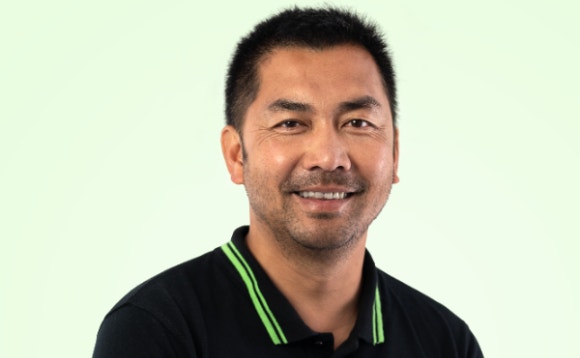
Based in Nantes, Northwest France, Quietic is an MSP founded in 2018 by Marc Pham and Thierry d’Acremont, born out of one of the main principles of Chinese medicine; prevention.
The name, which is made up of “quiet” and “TIC”, the French for “ITC”, reflects its aim to solve companies’ IT problems through a proactive model.
The organisation saw 35 to 53 per cent growth in the first two years, propelled by COVID.
Today, it sees a growth rate of about six to ten per cent per year.
In FY23, revenue stood at €1.95m and reached €2.1m (£1.83m) a year later, a figure which is expected to remain the same in FY25, Pham, Quietic’s co-founder and sales and growth director, tells CRN.
The stagnation can be explained by two reasons, he says.
“First, my associate retired, so I’ve taken over the whole company by myself.
“Second, we don’t have the same firepower after I’ve taken over his shares. So turnover has dipped a bit, but I think it will end up about the same as last year.”
As of today, 70 per cent of the MSP’s revenue comes from subscriptions.
The company currently works with 200 to 300 customers, a number which, according to the CEO, is constantly growing.
He also reportedly enjoys zero clients' departures, excluding buyouts and bankruptcies.
In terms of sectors, the MSP is quite sector agnostic and doesn’t lean toward a specific sector.
While the MSP targets SMBs with five to 50 employees, with its sweet spot being in then 20 to 50 users, it intends to expand its reach of customers as their needs evolve.
Pham highlights that the company is heading towards an MSSP model, driven by the demand in cybersecurity.
The organisation, which already has implemented zero trust solutions to customers, has realised that the technology is too powerful for small companies.
“SMBs find it to have too many constraints.”
To serve these customers, Quietic counts 13 employees and two apprentices.
While Pham doesn’t intend for AI to impact its workforce within the next two to three years, he says it will change its workforce by replacing first- and second-line support.
“We might have to part ways with people, or not recruit new ones, because tools will already do the work. We won’t hire for tasks the tool can handle.”
Acquisition attempts and territorial ambitions
The MSP has tried twice in the past two years to acquire other companies to broaden its partner base, but it was outbid by a competitor on the first try, and its offer was rejected by the second company on its radar.
This hasn’t sapped Pham’s morale, as he explains that he currently has a couple of targets in mind and wants to pursue external growth in the coming years.
It wants to go beyond serving SMBs with five to 50 employees and tackle the opportunities presented by companies with 100, 200, 300 people, not only offering managed services but also co-managed services to complement the company’s internal IT team offers.
As of today, the company operates within 100 to 200km around its headquarters, an area which covers French cities such as Lorient, Tours, Rennes, and Le Mans.
While the MSP leader values client proximity, he highlights that he also works with clients in other countries, such as Japan or Germany.
“That’s not a problem, because the MSP model can manage clients anywhere.”
Although there are no concrete plans yet, Quietic could open offices across France in the coming years, with Paris as a distant target.
“If I had the opportunity, I’d go for Europe. Not necessarily a specific country, but Europe.
“But to challenge in other countries you need broader culture and human management.
“If you’re not close to your clients, you lose the value with them. That’s no good.”
Distributors and vendors
To serve clients across Britanny and beyond, the firm relies on a network of partners, such as VAD BeMSP.
The distributor has helped Quietic establish an MSP model, by recommending and providing the right tools and the right vendors, such as Datto.
When it comes to hardware distribution, it also partners with Arrow and TD SYNNEX
In terms of vendors, it deals with Bitdefender, Microsoft, and Google, Hornetsecurity (now Proofpoint).
‘I do not believe in a European cloud’
At a time when European sovereignty is at the heart of numerousdebates and concerns, Pham says he does not believe in a European cloud.
“Personally, I no longer believe in private cloud in France. That’s archaic.
“I don’t believe in a European-only cloud either. Microsoft, Google, Amazon; they’ve already won.
“They’ve built these tools for decades. We won’t reinvent them.
“It’s better for us to focus on productivity, not on always trying to ‘protect’ in unrealistic ways.
“Intellectual property ideas are global, which is why I don’t believe in a European sovereign cloud.”
The CEO also wants to focus on green IT by reducing Quietic’s carbon footprint.
AI may also bring internal changes, and will replace first and second-level support, according to Pham.
“AI will answer first. No need for a technician.”