‘We need direction rather than blind panic’: French MSPs on AI adoption and MIP model
CRN sits down with partners during MSPCON to discuss managed AI offering, FOMO and MIP transition
During MSPCON, the Parisian event organised by value-added distributor BeMSP, AI was never far from the conversation, whether on stage or in the conference’s corridors.
For French MSPs, the transition towards the MIP model and the rise of AI emerged as two of the most discussed themes facing the channel across the Channel.
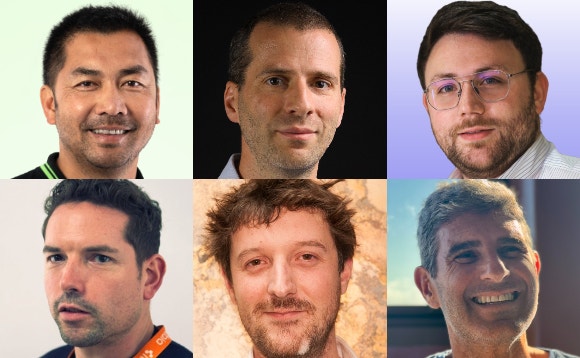
From managed AI offerings and customer demand to fears of missing out and the role MSPs should play in guiding adoption, CRN asked leaders from Dhala Cyberdéfense, Easy Service Informatique, Itcom Services, ITAIA and Quietic how they are navigating the technology’s rapid rise.

Do you already have a managed AI offering?
“I don’t think I’m legitimate yet because I haven’t found a model internally that makes me think: ‘Yes, this is something I could confidently deploy for customers.’
“At the moment it still feels like experimentation, but I know that as soon as I find something reliable, tested and proven, I’ll offer it.
“I also think we’ll probably get pricing wrong at the beginning.
“It’s similar to the early days of managed services when MSPs were charging very low amounts because nobody really knew where the ceiling was.
“The key thing is not to be afraid of charging for value.”
What do you think of the MIP model overall?
“I think MIP is a trend that we’re going to have to follow because if we don’t, somebody else will follow it for us.
“We don’t really have a choice, but that doesn’t mean we need to panic.
“There are still companies making enormous amounts of money using very traditional outsourcing models.
“It’s important not to suffer from FOMO and convince ourselves that we’ll die if we don’t become MIPs tomorrow.
“We need direction rather than blind panic.
“The challenge is figuring out what role we actually want to play.”
Do you already have a managed AI offering?
“Not yet, but we’re thinking about it.
“At the moment we’re experimenting internally and trying things ourselves before deciding whether we’re legitimate enough to offer it to customers.
“When we talk about AI, there are obvious areas such as licences, choosing the right model, security and governance.
“But understanding the customer’s business is a completely different challenge.
“There are undoubtedly tasks that can be automated or enhanced through AI, but you still need to understand the customer’s sector.
“You need to understand their industry, their regulations, their customers, their vocabulary and the way they operate.”
What do you think of the MIP model overall?
“We don’t yet know exactly what will be included in a MIP offering.
“Speaking very broadly, of course it’s a direction we want to pursue. It’s another string to our bow.
“The challenge is defining what belongs within that model and where the limits are.
“Ultimately, we’ll be providing intelligent tools, managing them, governing them, securing them and integrating them.
“I don’t think we can afford to ignore it.”

Do you already have a managed AI offering?
“We have been developing our own AI solution on Azure for around two years.
“The main objective was to reduce the workload on our front office while providing customers with a conversational AI assistant.
“The assistant uses their technical documentation and IT environment to provide contextualised responses.
“It can either answer users directly or propose alternative solutions before escalating the issue to one of our technical teams.
“So far, it has met customer expectations very well, while still allowing users to contact us directly by phone or email if they prefer.
“We have also developed a second AI tool for internal use.
“It allows technicians to query a conversational agent for customer-specific technical information and quickly obtain relevant answers.”
What do you think of the MIP model overall?
“I see AI through three different lenses.
“The first is customer-facing AI; how does AI integrate into customer processes and create business value?
“On that point, I am still balancing whether my role is primarily advisory or whether I should be delivering specific solutions.
“The second dimension is personal productivity AI.
“Things like writing meeting notes, correcting spelling mistakes or retrieving information more quickly.
“The third dimension is broader process automation.
“That is the workflow and automation discussion we heard about today.
“And that is where things become more complex. I am still exploring that area myself.
“The challenge is understanding how to combine automation with intelligence.
“People often confuse automation with AI. Automating a process is not necessarily the same as making it intelligent.
“But yes, I absolutely identify with the MIP vision.”

Do you already have a managed AI offering?
Moulis: “The important question is: if we become MIPs, are we talking about all AI solutions? Or are we only talking about generic AI platforms that we can deploy across all customers, such as Copilot?
“Because specialised AI is a different discussion altogether.
“I think there will ultimately be two worlds; highly specialised AI tools designed for specific industries and generic AI platforms like Copilot that everyone uses for productivity and everyday tasks.
“We’ll need to find the boundary between those two worlds. The challenge isn’t just understanding where that boundary is, it’s making sure our technicians understand it too.
“Otherwise, they’ll end up spending all day helping customers automate very specific niche use cases.”
Barjhoux: “What I know is that AI is going to create more work for us. That’s a certainty.
“One thing that stood out during the legal panel was that almost every slide contained some version of: ‘the customer remains responsible.’
“At the end of the day, if you’re the one who connected the AI solution, deployed it and integrated it, you’re still the person who gets blamed if something goes wrong.
“Ultimately, the responsibility comes back to you.”
What do you think of the MIP model overall?
Moulis: “What I took away from this morning is that MIP isn’t necessarily a destination, it’s more of a framework for reflection.
“It’s making us ask ourselves questions we weren’t asking six months ago, such as how are we going to monetise AI? How are we going to support customers? What skills are we going to need? What are we going to automate? What remains human?
“I don’t necessarily think customers are asking for a ‘managed intelligence provider.’
“They’re asking us to solve problems.
“If AI helps us solve those problems, then great. If not, then the label itself doesn’t really matter.
“What matters is the value we provide.”
Barjhoux: “We’re talking about AI as though everybody is ready. But that’s not what I’m seeing.
“Some customers are very advanced. Others are nowhere near ready. Some still struggle with basic cybersecurity practices. Some still don’t have proper documentation. Some don’t have governance.
“And now we’re talking about AI.
“There’s a risk of assuming the market is moving faster than it actually is.
“There are probably customers who are ready for AI projects tomorrow morning, but there are also customers who need another three years before they’re even capable of using these tools properly.
“As MSPs, we’ll have to deal with both realities at the same time.”

Do you already have a managed AI offering?
“Yes; around 95 per cent of our customers use Microsoft 365.
“We already offer Copilot and help customers understand how to use it and what value it can bring.
“AI is relevant, but the key challenge is how everything connects together.
“I am not convinced that smaller providers currently have access to all the necessary components to deliver a complete AI offering.
“My vision is to make AI genuinely useful for productivity by integrating it into the customer’s existing ecosystem while keeping it secure.”
What do you think of the MIP model overall?
“For me, MIP is still largely a marketing concept at this stage.
“Maybe in a year or 18 months it will be different, but right now I see it in a similar way to co-managed services.
“We spent years hearing that co-managed services were the future, and while there is value there, managing IT alongside an internal team is often more complicated than people make it sound.
“MIP is another step beyond that.
“At the moment, AI is still essentially a highly intelligent version of Google in many people’s minds. It gives better answers, but the fundamental challenge remains asking the right questions.
“Before you can sell something, you have to explain it. You have to simplify it and make customers understand what they are buying.”