‘It's beyond my expectations’: Dhala Cyberdéfense boss on rapid turnover growth
Valentin Bourgeois talks €400k annual revenue rise, regulatory demand and the MIP model transition
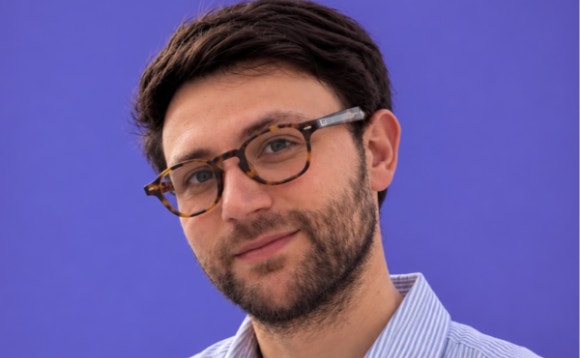
Dhala Cyberdéfense is targeting another year of growth after increasing revenues by roughly €400k annually as the French MSP enters its fourth year of operations.
The Paris-based MSP has evolved rapidly since launch, with CEO and founder Valentin Bourgeois telling CRN that its performance has so far exceeded his expectations.
Bourgeois expects that momentum to continue into the company’s fourth year.
“For now, everything is going very well. It’s beyond my expectations. It’s moving very quickly,” he says
The CEO said revenue was around €300k in the first year, €800k in the second and €1.2m in the third and is expected to reach €1.6m (£1.4m) this year.
The growth comes as Dhala’s customer base reaches 41, with the MSP targeting roughly one additional customer every month.
But the CEO does not intend to increase headcount at the same pace.
“I’m convinced that we can almost double the number of clients without necessarily needing to recruit,” says Bourgeois.
“My goal is to improve our processes, our visibility and our communication, rather than necessarily increasing the wage bill.”
The firm currently employs five administrators and engineers, alongside a newly created sixth position for a dedicated developer.
Bourgeois explains that keeping the organisation lean also allows Dhala to invest in retaining its existing team through benefits and bonuses
“I don’t want to recruit. I just want to surround myself better and remain well surrounded,” he says.
US expansion remains a ‘hidden dream’
Dhala’s customers are predominantly Parisian, although the distributed nature of modern work means employees supported by the MSP are located around the world, including in the US, Brazil and Romania.
Bourgeois ultimately wants to take the company itself further internationally.
“The US is a hidden dream of mine,” he says.
“I’d like to tackle the American market with French companies. But for now, there’s so much business in Paris that we’re focusing on that.”
Bourgeois says acquisitions are not currently on the agenda following a period that included Dhala’s ISO 27001 certification and other organisational changes, but he does not rule out inorganic growth in either France or the US.
Regulation fuels financial services demand
While Dhala does not currently specialise in a particular vertical, regulated financial services businesses are increasingly finding their way to the MSP.
Bourgeois points to family offices and venture capital companies as an emerging customer segment.
DORA is among the forces driving that demand.
Bourgeois says regulatory requirements imposed on financial institutions are filtering through to consultants and other businesses that work with them.
“People often call me in a panic saying, ‘The bank has suddenly asked us to become DORA compliant. How can we do it in two days?’”
He expects NIS2 to eventually produce a similar effect but believes adoption will be slower in France.
“I think it’ll take two or three years before we really start hearing about it,” he says.
“I think we’ll see the same enthusiasm that we have with DORA today with NIS2.”
Dhala has also completed ISO 27001 certification, which Bourgeois expects to provide another route to growth among businesses seeking security-conscious IT partners.
He describes Dhala as one of the few French MSPs to have taken the process through to completion.
“It demonstrates our good practices in terms of security, maintaining operational conditions, storing our customers’ information and securing their access,” Bourgeois tells CRN.
Dhala plots move into managed AI
AI could provide another growth engine for the business.
Dhala has already delivered AI services to some customers on an ad hoc basis, but Bourgeois wants to turn the technology into a defined part of its offering.
“Why not have a third offering where we integrate AI into your company?” he says.
“We’re probably the best people to do it. We know where your data is, we know how it’s stored, we know how it works and we know who has access to it.”
Potential services could include giving businesses visibility over the AI models employees are using, the context in which they are being used and which corporate data they can access.
Bourgeois believes the expansion could eventually move Dhala from the MSP model towards becoming a managed intelligence provider (MIP).
“I think that’s what will take me into MIP. That’s going to be the next step,” he says.
AI already embedded internally
Dhala is already using several AI models internally.
Its databases are stored in a format that can be queried by AI, allowing engineers to incorporate customer-specific information when troubleshooting.
“We know that context is 90 per cent of the work in the end,” Bourgeois says.
The MSP has also automated elements of problem detection and resolution, while customer calls are recorded and processed using AI to provide additional information to its technical team.
Bourgeois also acknowledges AI represents an unknown for the MSP industry’s longer-term growth.
He says the technology has so far done little to reduce businesses’ need for cybersecurity and managed services and expects that to remain the case over the next five to ten years.
Dhala's partner ecosystem
Microsoft and Kaseya are Dhala’s two largest vendors, with the latter relationship centred particularly around the Datto ecosystem.
Bourgeois says his experience with Microsoft over the past decade has convinced him of its staying power among SMEs.
“I've never seen a company move away from Microsoft 365,” highlights the CEO.
“Microsoft is a bet on the future. I'm confident that, even in ten years' time, it will still be there, offering tools that remain at the cutting edge.”
He points to Microsoft 365 Business Premium, Exchange Online and Intune as products that make the vendor attractive to smaller businesses on price, availability, scalability and ease of management.
Dhala works with BeMSP for Datto and Pax8 for Microsoft, alongside hardware-focused disties such as TD SYNNEX and ALSO when customers need devices.
Hardware prices push customers towards refurbished devices
Bourgeois has also seen significant increases in hardware costs.
He estimates that a computer he could quote at around €700 a year ago would now cost closer to €1,100.
Dhala has responded by selling more refurbished machines, with Bourgeois saying customers can typically obtain two or three-year-old devices for between €500 and €800.
He believes the shift is overwhelmingly being driven by economics rather than sustainability.
“I think predominantly it’s price that’s driving it,” he says.
“Green IT is a bonus.”