‘AI has now come of age’: Dynatrace VP of worldwide partners
Michael Allen talks three AI pillars, acquisition philosophy and the vendor’s “secret sauce”
On Thursday, CRN headed to the Emirates Stadium, headquarters of Premier League winners Arsenal FC.
But the champions on the day were not the players of North London’s red club. Instead, it was US-based vendor Dynatrace, which hosted its Innovate Roadshow event.
Attended by the company’s customers and partners from across the UK, the event explored changing customer needs, with observability becoming increasingly critical as organisations seek answers rather than guesses from a technology that still has to earn their trust.
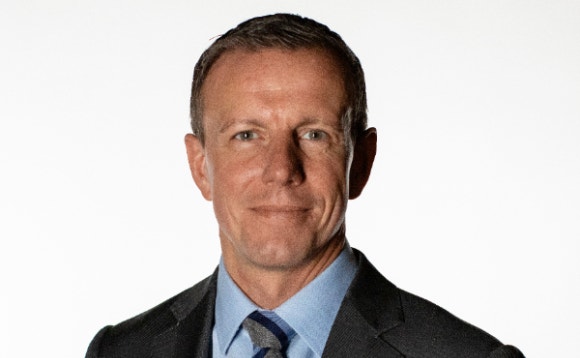
During the event, CRN spoke with Michael Allen, VP of worldwide partners at Dynatrace, to discuss the company’s strategy, evolving portfolio and financial ambitions.
What message do you hope attendees take away from today’s event?
“There are three major themes everybody is talking about today, and they’re all closely connected.
“The first is observability, which is evolving into what I’d call the control plane for autonomous operations.
“Last year we described autonomous operations, or AIOps, as the combination of observability, engagement, process and automation.
“Today, you can see that coming together with ServiceNow providing the engagement layer, Dynatrace delivering observability and automation sitting on top to enable self-healing IT.
“The second major theme is moving AI workloads from prototype into production.
“A year ago, customers were asking how to access AI models. Today, they already have access to them. The question has shifted to whether those models can be trusted.
“Are they properly governed? Are non-deterministic models producing deterministic outcomes? Can organisations trust the answers AI is generating?
“That’s exactly what we’ve been discussing throughout today’s event and what I’m discussing every day with partners and customers.
“AI has now come of age.
“We’re no longer using it simply to automate IT processes. We’re using it to automate business processes.
“To do that safely, organisations need governance. They need to know whether models hallucinate, whether AI agents are biased, whether models drift over time and whether sensitive data is leaking into prompts.
“AI governance, AI safety and AI trustworthiness have therefore become critical.
“The third pillar is software development.
“Tools such as GitHub Copilot, Cursor and Visual Studio have fundamentally changed how developers work. Rather than writing every line of code themselves, developers increasingly describe what they want AI to build before validating the output.
“We’re seeing enormous demand in this area.
“I’d argue that well over half of the major software companies are now using AI to build software.
“But if AI accelerates development, organisations also need to validate what it produces and ensure there are no structural regressions.”
Since AI has become much more widely adopted, there also seems to be a growing lack of trust in it. Is that why observability has become such an important message for Dynatrace?
“There’s certainly been a tremendous amount of hype around AI.
“What’s important to remember is that AI has been part of the Dynatrace platform since 2014.
“When we built our next-generation platform, the objective was simple: could we build an observability platform without dashboards?
“If AI can reliably identify the precise root cause of a problem, rather than simply correlating different pieces of information, then you no longer need people constantly watching dashboards. You can automate responses because you know exactly what’s gone wrong.
“To achieve that, you need a causal model at the heart of the platform that understands how every application, every piece of infrastructure and every user interaction connects together.
“That’s what Smartscape provides.
“Because we’re observing every transaction continuously, we can identify the precise root cause rather than simply correlating metrics.
“That’s really Dynatrace’s secret sauce.
“We’re not guessing.
“We’re linking everything together to provide organisations with a precise answer they can automate against.
“That’s one of the fundamental differences in Dynatrace’s approach to AI-powered operations.”
To make sure that message reaches partners and keeps pace with changing customer demand, have you made any changes to your partner programme over the past 12 months?
“There haven’t been any fundamental changes to the programme itself.
“When we spoke last year, I mentioned we had around 600 partners globally and roughly 50 in the UK. Those numbers remain broadly the same.
“What has evolved is the platform.
“As Dynatrace has expanded beyond observability into automation and developed deeper AI partnerships, including with ServiceNow, our ecosystem has naturally expanded alongside it.
“More than 80 per cent of Dynatrace customers also use ServiceNow, so there’s already significant overlap between our partner ecosystems.
“The structure of the programme hasn’t changed, but the opportunities within it continue to evolve as the platform evolves.”
Have you strengthened relationships with existing partners or expanded your partner ecosystem in other regions since we last spoke?
“If you look at our roughly 600 partners globally, or the 50 or so in the UK, you’ll find a pattern that’s common across the industry.
“Around 70 to 80 per cent of partner revenue typically comes from around 20 to 30 per cent of partners.
“Every partner is important, but some operate at enormous scale, particularly when it comes to large AI transformation projects.
“These projects aren’t simply AI deployments. They involve connecting AI to enterprise data, ERP systems, cloud platforms and broader business environments.
“That’s where our largest global systems integrators stand out.
“They have deep expertise around Oracle, SAP, hyperscalers and AIOps with companies such as Dynatrace and ServiceNow.
“They’re capable of delivering the end-to-end AI solutions customers are looking for today, while also establishing the governance frameworks around them.
“Our strategy isn’t about recruiting as many partners as possible. It’s about investing in the relationships that create the greatest mutual value.
“We’re also seeing particularly strong momentum in regions such as the Middle East.
“There’s significant sovereign AI activity there because many countries require AI platforms to operate within national borders.
“Like the UK and the US, governments across the region are investing heavily in AI, making it a real growth market.”
Martin Bradbury became regional VP for UK and Ireland in August. Have there been any other regional leadership changes since then?
“No major changes.
“From our CEO through the senior leadership team, there’s been tremendous stability.
“Jay Snyder continues to lead our global partner organisation, and our founder remains CTO.
“We’ve grown into a $2bn business while keeping the same leadership team and the same DNA that got us here.
“That’s the leadership we believe will take us from $2bn to $5bn and beyond.”
Last year you also said you wanted to continue expanding both your internal teams and your partner ecosystem. From everything you’ve told me today, am I right in thinking you’ve achieved those objectives?
“If you’re referring to partner numbers, then yes, we’ve continued to grow, although probably by no more than around ten per cent.
“That said, our strategy has never been about recruiting as many partners as possible.
“As our organisation grows, we’re able to support more partners, but the real objective is building deeper, more strategic relationships.
“We’re increasingly focused on partners that already have a seat at the executive table within our customers’ organisations.
“Over the past year, observability has become a much more strategic differentiator because of AI.
“Historically, the large global systems integrators operated on what I’d describe as a labour arbitrage model: more consultants meant more revenue.
“AI changes that completely.
“It creates a non-linear business model where partners are using AI to develop software, automate business processes and deploy enterprise-scale AI platforms.
“As they build those AI environments, governance becomes central, and that’s where Dynatrace fits.
“We’re seeing major investments from our largest partners.
“Kyndryl is a great example. It recently opened its first global AI Innovation Centre in Liverpool, employing more than 500 AI specialists, with similar centres now opening in Singapore and Frisco, Texas.
“Those investments show just how central AI has become to partner strategies.
“As those organisations transform, we want Dynatrace to be at the heart of that transformation alongside them.
“As a result, our relationships with GSIs have become far more strategic. They’re no longer purely technical conversations. They’re discussions taking place at executive and CEO level.”
Given how quickly AI is evolving, are acquisitions becoming a bigger part of your strategy?
“I can’t comment on future acquisitions, but I can talk about what we’ve done over the past year.
“Our most recent acquisition was Bindplane, which enables organisations to process telemetry at the edge.
“Customers can filter, enrich or mask data before sending it elsewhere, and route different telemetry to different platforms depending on their needs.
“It’s particularly relevant in environments such as automotive, smart cities and retail, where huge volumes of telemetry are generated outside the datacentre.
“Before that, we acquired DevCycle, a major contributor to the OpenFeature open-source project.
“Those acquisitions strengthen our platform, but our philosophy remains the same.
“We’re not interested in acquiring companies simply to bolt their technology onto Dynatrace.
“Any acquisition has to integrate seamlessly into the platform.
“Sometimes that’s straightforward.
“Other times, we integrate the intellectual property and engineering expertise first before releasing it to customers.
“Getting that integration right is more important than moving quickly.”
This is just the first of our coverage from Dynatrace Innovate Roadshow. Stay tuned, as more exclusive interviews will soon follow on CRN.