‘Resentment is like drinking poison and hoping your enemy dies’: Mohamedou Ould Slahi on forgiveness, freedom and resilience
During XChange EMEA, the former Guantánamo Bay prisoner explained why kindness, not anger, became the defining lesson of his 14 years in captivity
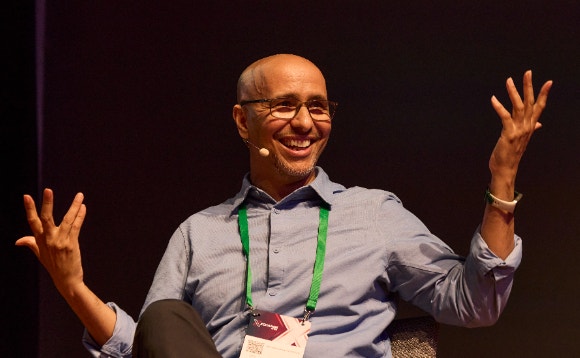
Forgiveness is often portrayed as something we do for others.
For Mohamedou Ould Slahi, it became the key to reclaiming his own freedom as he shared during his closing keynote at CRN’s XChange EMEA event in The Hague, The Netherlands.
Taking to partners from the stage the Mauritanian author and former Guantánamo Bay captive reflected on a life shaped by hardship, loss and more than 14 years of imprisonment without charge.
Ould Slahi’s story began in rural Mauritania, where he described growing up in poverty, walking barefoot to school because his family could not afford shoes and becoming determined to pursue an education despite the obstacles in front of him.
After losing his father at a young age, he eventually earned a scholarship to study engineering in Germany before returning home, believing his future had only just begun.
That changed after he received a phone call from his cousin asking him to help a relative who had just been admitted to hospital.
But without Ould Slahi’s knowledge, the call had been made using a mobile phone belonging to Osama bin Laden.
This event would later become central to the suspicions that led to his arrest following the 11 September attacks.
Ould Slahi was arrested in Mauritania before being transferred to a secret prison in Jordan and later to the US detention facility at Guantánamo Bay, where he spent more than 14 years imprisoned without being charged with a crime.
During his detention, he said he endured prolonged isolation, torture and sleep deprivation.
“I was selected for the death penalty,” he told the audience.
“I did not sleep for 70 days.”
Yet it was during those experiences that his perspective shifted.
“The only thing I regretted is I was not kind enough to my mother, to my sister, to my brothers, to my partner and to humanity,” he said.
“I was praying in silence, ‘Allah, when you give me another chance, I will be a kind person.’”
Choosing forgiveness
Following his release, Ould Slahi sought out several of the people connected to his imprisonment, including former guards, prosecutors and detainees.
Many have since become friends.
Asked by CRN UK senior reporter Paul Ferretti during a Q&A how he came to forgive those responsible for his suffering, Ould Slahi argued that forgiveness is ultimately an act of self-preservation rather than generosity.
“Resentment is like drinking poison and hoping that your enemy dies.”
He added that holding on to hatred only prolongs a person’s own suffering.
“If you hate, if you have resentment inside your heart, no one can free you,” he said.
“You have to free yourself from them.”
Redefining freedom
When asked what freedom means after spending more than 14 years imprisoned, Ould Slahi noted that the concept is difficult to explain to someone who has never lost it.
“It’s very hard to explain the concept of freedom to someone who never lost freedom,” he said.
Instead, he described it as something that exists internally rather than purely physically.
“I found this freedom inside myself.”
That mindset, he explained, was reinforced by a daily practice he began while still imprisoned.
Every day, Ould Slahi wrote down at least five things he was grateful for, a habit he continues today.
Closing the session, he encouraged attendees to value the people around them and not wait to express kindness.
“If you love someone, tell them, because you may not get tomorrow.
“If you want to do something good, do it now, today. Do not wait.”
More from the XChange series
Missed out on XChange EMEA?
You can still register to attend XChange MSP, taking place on 1 October in London, and XChange Germany, taking place in Mannheim on 3 November.
We’ve got more great content coming.