‘We want to do much more with much less’: Veeam EMEA channel chief
Kinda Baydoun talks 51 per cent growth among managed partners, UK turnaround and new sovereignty accreditation
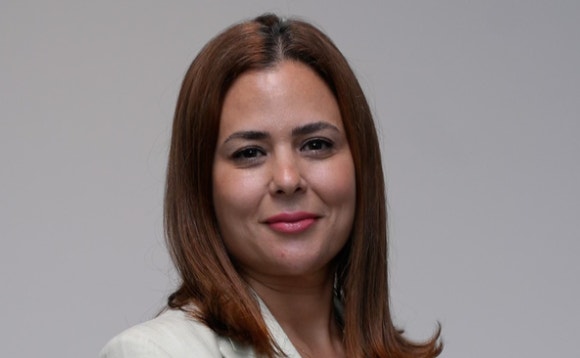
Veeam is reducing the number of partners it manages directly across EMEA and consolidating its European distribution network as part of its channel overhaul.
Speaking to CRN, Kinda Baydoun, Veeam’s senior director of EMEA channel and alliances, outlines a strategy focused on concentrating resources on fewer partners, expanding its enterprise capabilities and strengthening its position in data security and AI governance.
The changes include reducing the average number of partners assigned to each channel account manager from 25 to a maximum of five, with some employees now dedicated to just one or two accounts.
“We started a new strategy in FY26, which is basically we want to do much more with much less,” she says.
Baydoun explains that Veeam’s business had previously been spread across too many partners and distributors, limiting the attention it could give to individual relationships.
“When your business is scattered, the partner will not see you as a relevant vendor for them.”
The vendor has since transferred responsibility for many smaller, transactional partners to distribution, allowing its channel teams to concentrate on partners with greater growth potential.
According to her, business with the same group of directly managed partners has increased by 51 per cent year-on-year.
The changes are being implemented across EMEA, including the UK and Ireland, where Veeam is also preparing to appoint a new channel leader.
UK turnaround and new channel leadership
The UKI remain an important market for Veeam, although Baydoun explains that the vendor has room to improve its performance in the region.
“I don’t think we are where we should be today, and we are working on getting back getting back the UK on track,” she argues.
The company named Piero Gallucci as regional VP for UKI in January, a move the EMEA leader believes is already improving engagement with customers and partners.
The vendor is also preparing to announce a new UKI channel leader, following Nick McAlister's departure in July.
In a previous interview withCRN, he explained that Veeam worked with around 1,100 partners across the UKI, although only around 300 are managed directly
Baydoun says the recruitment process has taken longer than expected because she wants to ensure the right appointment and now expects the selected candidate to sign shortly.
The UK is also an example of Veeam’s new approach to partner management.
She points to Softcat, which now has a dedicated partner account manager responsible exclusively for that relationship.
The aim is to give larger strategic partners more attention and identify opportunities across Veeam’s expanding portfolio, including data resilience, security and AI governance.
Veeam consolidates European distribution network
Veeam’s channel restructuring extends to its distribution network, with the vendor moving towards a smaller group of strategic distributors.
Baydoun says the company had 85 distributors across EMEA when she took over the regional role.
It has since signed European agreements with TD SYNNEX and Arrow, which will become its two principal distribution partners across Europe.
“We are committed really to focus on two distributors across Europe, and that’s TD SYNNEX and Arrow,” she says.
The vendor is gradually terminating agreements with smaller distributors, although the timing depends on their importance to individual markets.
“I know it’s unfortunate, but we had to take this hard decision to terminating them,” she adds.
Veeam is adopting a similar approach in the Middle East and Africa, where it intends to concentrate on two distributors, although the companies involved will differ from those selected in Europe.
The strategy is designed to allow Veeam’s direct channel teams to concentrate on strategic partners while distributors manage more transactional business.
Baydoun notes that distributors are better equipped to support these relationships through their marketplaces, automation capabilities and broader partner coverage.
The consolidation also extends to alliances, with Veeam identifying six strategic relationships that will receive dedicated attention from its alliances team.
“We don’t want to cover every single partner in the market anymore, or every single alliance anymore, we’re being very picky,” she tells CRN.
Veeam is also prioritising partners with expertise in AI, security and enterprise services, including those with strong relationships with Microsoft.
Sovereignty badge to address European concerns
Alongside the channel consolidation, Veeam is preparing a new accreditation for service providers in response to rising concerns about data sovereignty across Europe.
Baydoun reveals that the vendor is adding a Sovereignty Badge competency to its channel programme, designed to identify partners capable of offering sovereign cloud services.
The initiative follows increased questioning from European customers about data access, recovery and the location of their information.
Under the proposed scheme, Veeam will assess participating service providers and certify those that meet its sovereignty requirements.
The accreditation is intended to give customers an alternative to working directly with large hyperscalers where they require local cloud infrastructure.
“We have service local service providers certified by Veeam that their cloud is sovereign that they can work with and they can have our solutions as a service,” she explains.
Baydoun says the first phase of the initiative is expected to be announced in the coming weeks.
A second phase is being developed, although she declines to disclose its details ahead of an official announcement.
Veeam is also recruiting sovereign cloud specialists in Europe to support the strategy.
The exec expects sovereignty concerns to increase across the continent rather than disappear as geopolitical tensions influence enterprise technology decisions.
By contrast, Baydoun sees greater openness towards hyperscalers in the Middle East, where major cloud providers are investing in local datacentre infrastructure.
AI and security reshape partner priorities
Veeam is also changing the capabilities it expects from strategic partners as it expands beyond its traditional backup and recovery business.
Baydoun says the vendor is working with its global channel leadership to introduce additional competencies focused on data security and AI governance.
The strategy follows Veeam’s acquisition of Securiti AI last October and its efforts to position itself around data resilience and what it describes as data and AI trust.
According to her, partners increasingly need to combine technical expertise, professional services and security capabilities to address customers’ changing requirements.
“We want our partners to have sustainable and profitable business with them on one side, but at the same time, we want to benefit from their expertise, from their professional services, knowledge and all the products and the services that they can add to our solution.”
The company is placing greater emphasis on global systems integrators, having established a dedicated GSI organisation in New York this year.
Baydoun identifies Accenture, Deloitte, Kyndryl and DXC among the types of enterprise partners Veeam is seeking to develop relationships with.
She argues that these partnerships will become more and more important as the vendor expands its enterprise ambitions.
She also believes partners that bring together data resilience, security and AI expertise will be better positioned to capture future opportunities.
“Partners who are converging data security, data resilience, and AI in one conversation are the ones who will win the decade,” she says.
Baydoun highlights that AI projects are frequently delayed because businesses lack confidence in their data governance, access controls and compliance arrangements.
She believes addressing those concerns will help partners turn AI projects into commercial opportunities.
Veeam targets 40 strategic partners for AI enablement
To support the transition, Veeam has identified approximately 40 partners across EMEA for a dedicated enablement initiative focused on its expanded security and AI capabilities.
The programme, which Baydoun says is starting in October, will include demonstrations, proofs of concept, certifications and both remote and in-person training.
The partners have been selected based on their technical capabilities, investment capacity and potential to develop enterprise AI and data governance opportunities.
Baydoun says not every partner will need to pursue the same strategy, with some expected to remain focused on traditional data resilience services.
She also wants those selected for the initiative to move beyond training and begin generating measurable business.
Asked what she hopes to achieve over the next 12 months, the EMEA boss identifies partner activation as a central priority.
“I really want to see those 40 partners fully activated,” she says.
“By saying fully activated, I don’t mean just enabled. I want them to have a pipeline and I want to see some success stories already.”
Her target is to have at least half of the selected partners actively generating opportunities around Veeam’s security capabilities within a year.