‘AI hasn’t replaced leaders, it’s exposed weak ones’ - Marc Sumner on channel CEO upheaval
New board demands, channel-native over channel-lifers, and partners impacted most. Marc Sumner dishes on vital 2026 leadership trends
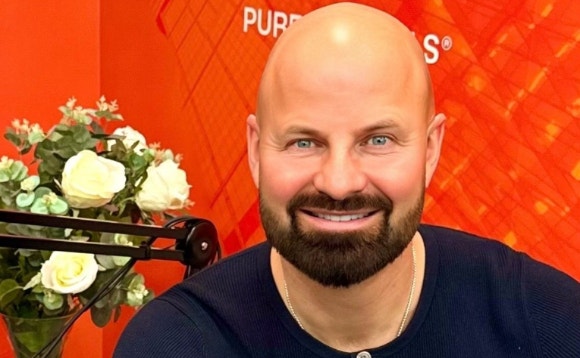
The UK IT channel is undergoing a period of unprecedented leadership upheaval, with turnover already surging in Q1 2026 and further disruption anticipated throughout the year.
While leadership changes are often tied to performance, Marc Sumner, CEO of channel recruitment firm Robertson Sumner, argues the current wave is being driven by deeper structural shifts across the industry.
“Yes, results matter, but this is about future-proofing,” he says. “AI, changing go-to-market strategies, and a new wave of younger talent are forcing businesses to rethink what leadership looks like.”
Boards are no longer willing to wait. Instead, they are proactively reassessing whether their existing leadership teams are equipped to navigate what comes next.
“Every board is asking: is this the person to take us beyond 2026? If not, they’re acting now,” Sumner explains.
Although the trend began to emerge in mid-2025, its pace has accelerated sharply this year.
CRN has already reported on at least 11 CEO/MD job moves in 2026.
Just last week the channel saw three new partner CEOs at Node4, Roc Technologies and Nasstar.
While other Top VARs like Bytes, Avania UK, XMA, Kerv, Ergo, Avanade, mhance, Kick ICT, Aura Futures, Communicate Technology and Espria have all either welcomed new leaders, or seen long-standing execs leave.
“You will see more leaders lose their jobs this year than ever before,” warns Sumner. “And those who don’t adapt will struggle to get back into the market.”
Channel lifers, channel-native, channel-stuck - which is preferred?
Sumner emphasises this reflects a broader transformation in how channel businesses operate, and not simply a response to underperformance.
“Businesses are changing how they go to market. Owners are questioning whether their leadership teams can deliver that change.”
This transformation is reshaping hiring preferences. While many resellers and MSPs still favour candidates with channel experience, there is a growing resistance to what Sumner describes as “career channel lifers.”
Instead, firms are prioritising leaders who bring adaptability and transformation experience.
“Channel-native” candidates are still valued, but only if they are not “channel-stuck.” Leaders who have only operated within a single vendor ecosystem, business model, or era are increasingly being left behind.
AI exposing leadership gaps
Artificial intelligence is playing a central role in accelerating leadership change. But not by replacing leaders, rather in the unforeseen way of highlighting weaknesses.
“AI hasn’t replaced leaders, it’s exposed weak ones,” Sumner states.
The shift demands a move away from intuition-led leadership toward data-driven decision-making.
“You need fewer opinion-led decisions, more data-led judgement and far less tolerance for ‘we’ll see’. Leaders who can’t translate AI into commercial advantage are already behind.”
What do channel orgs want from leaders now?
Sumner identifies three major shifts in leadership expectations
He predicts businesses will want builders, not operators, favour clarity over charisma, and desire people who are outcome-obsessed over experience-heavy.
“The tolerance for ‘safe hands’ is gone. Boards want visible impact inside six to 12 months.”
What roles are most at risk?
Certain leadership positions are especially vulnerable in the current environment.
Sumner categorises these as “high-risk” roles: “MDs who act as figureheads, sales directors running old-school field teams, vendor alliance leaders with no commercial leverage, and operations leaders who manage cost, not capability.”
He notes that middle management layers are being squeezed the hardest, particularly where responsibilities overlap or accountability is unclear.
Where will the impact be felt most?
The shake-up is not uniform across the channel ecosystem.
“Resellers and MSPs feel it first owing to tight margins and client pressure,” says Sumner.
“Distributors are next through automation and vendor direct models eating headcount. While vendors feel it later.”
So what does a successful channel leader look like?
Sumner points to a combination of commercial awareness, organisational discipline, and humility.
Future-proof leaders, he says, must “understand partner ecosystems and internal economics, hire people smarter than them, then get out of the way, and ruthlessly prioritise what drives margin and relevance.”